How to plant a clematis: depth, position and first prune
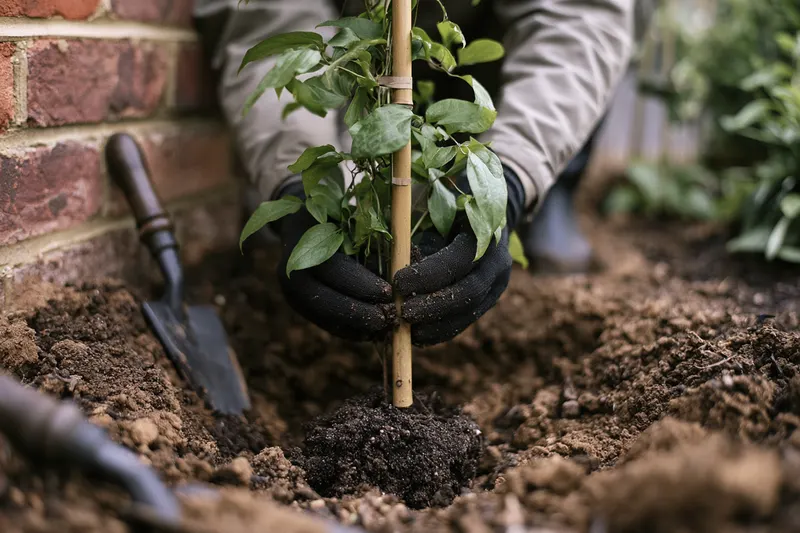
Half an hour of careful planting sets a clematis up for decades. Here is how to do it properly.
(01) The Clematis NotebookBotanical · Seasonal · Curious
The
Notebook
Grow better clematis, season by season. The Clematis Notebook is an independent guide to choosing, planting, pruning and caring for clematis in British gardens. Every article is checked against trusted horticultural sources, so you can garden with confidence.
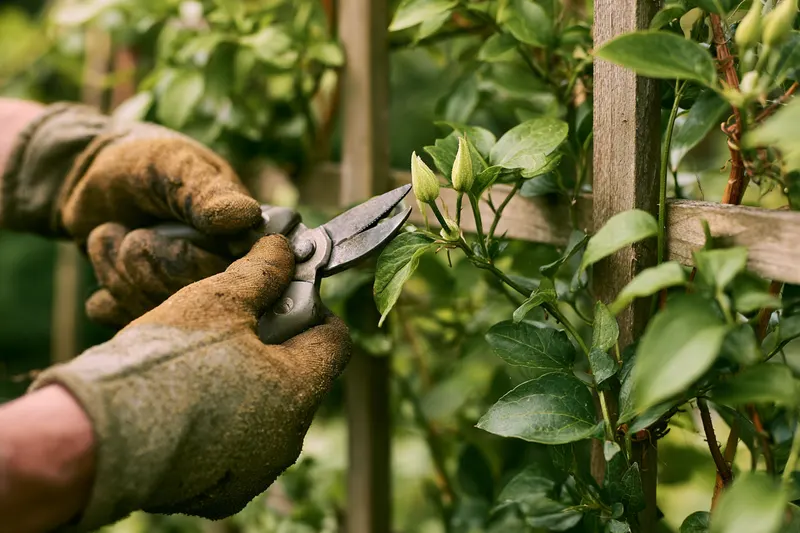
Clematis pruning groups 1, 2 and 3 explained simply: which plants belong where, when to cut, how hard, and what to do if you have lost the label.
Following RHS and British Clematis Society advice: flowering before June on the previous year's growth means group 1 (no routine pruning, trim straight after flowering if needed); large flowers in late May to June on short shoots from last year's stems, often repeating in late summer, means group 2 (light trim to the first strong buds in February or early March, and again after the first flush); flowering from late June on the current year's growth means group 3 (cut hard to the lowest healthy buds, 15–30cm up, in February or March) – a rule of thumb, since some cultivars such as 'Jackmanii' or 'Perle d'Azur' can be treated as group 2 or 3. — Our sources : Clematis: pruning (RHS)
Copy this code into your page. It’s free – just keep the link to the source.
Half an hour of careful planting sets a clematis up for decades. Here is how to do it properly.
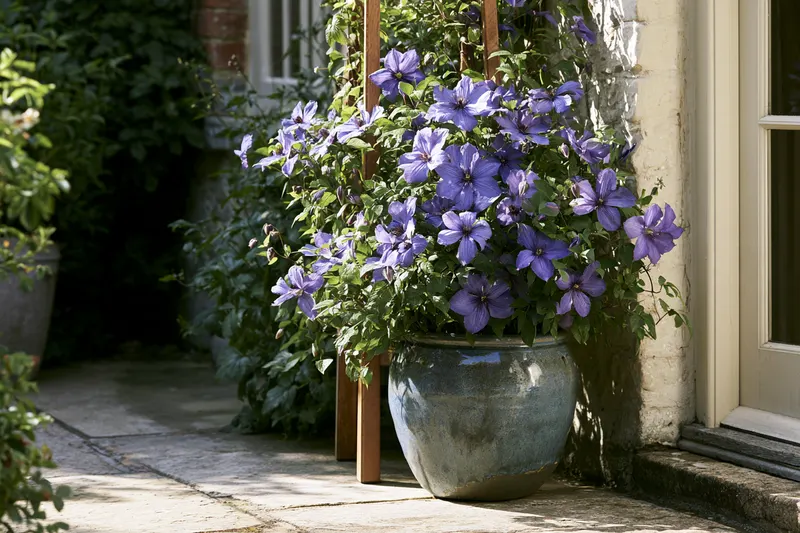
Compact varieties, the right pot and a steady supply of water: everything a patio clematis needs.
A clematis that collapses overnight isn't always lost, and it doesn't always have wilt.
A sunless wall is no reason to go without clematis. Some flower better there, with colours that stay true.
A classic garden partnership, and an easy one once you pick the right clematis.
Flowers in January, scent in March and green leaves all year, if you give them shelter.


